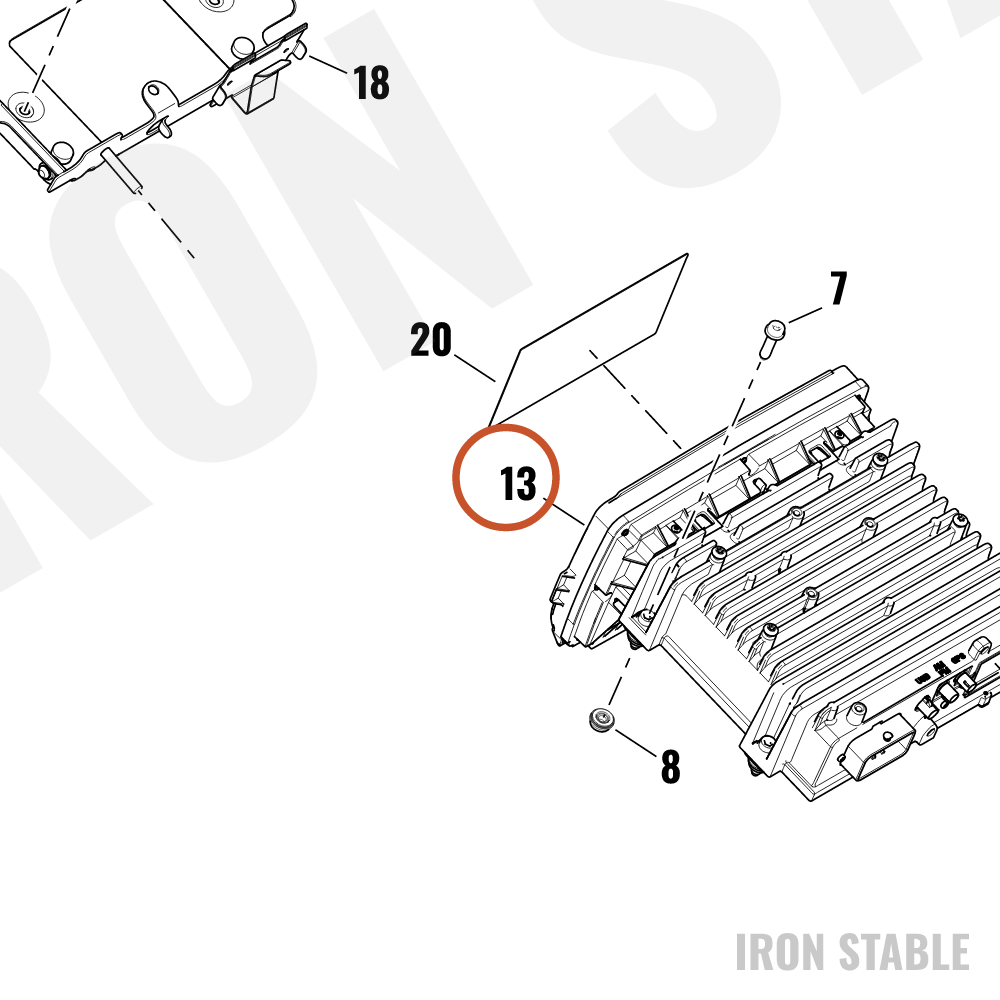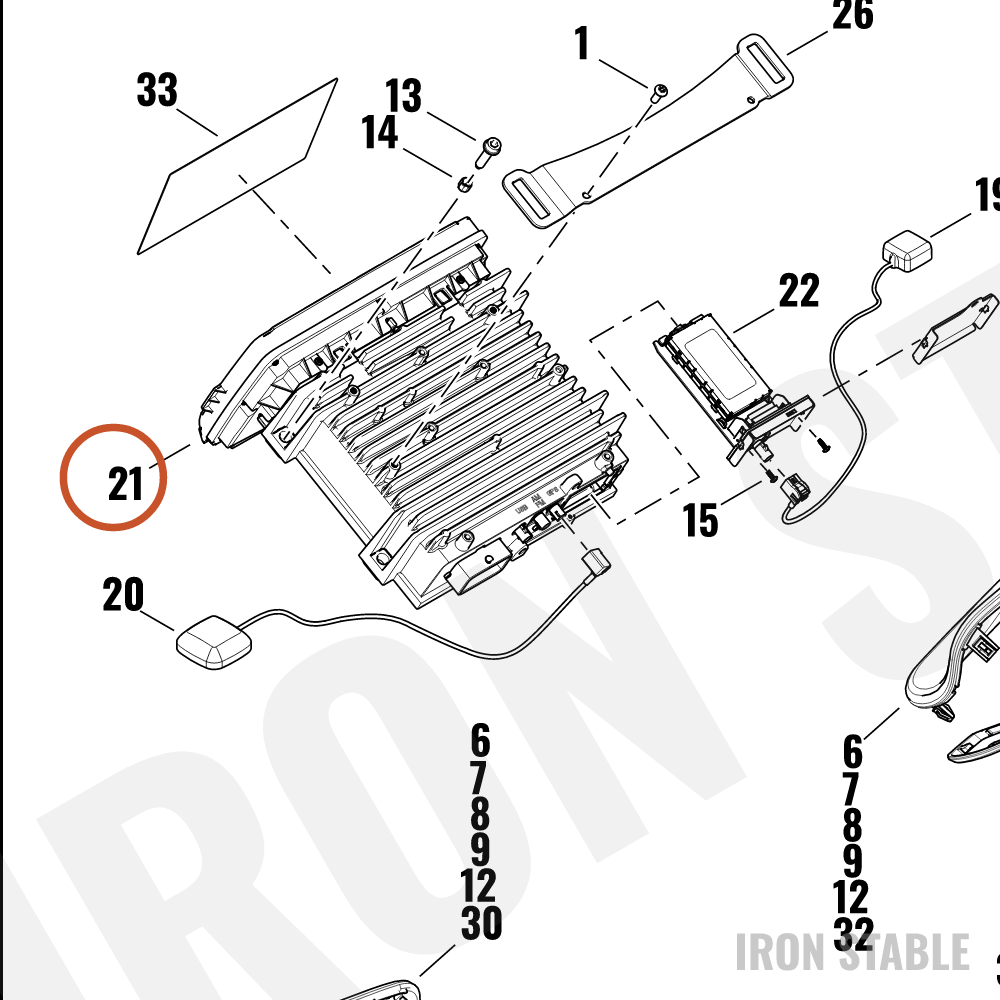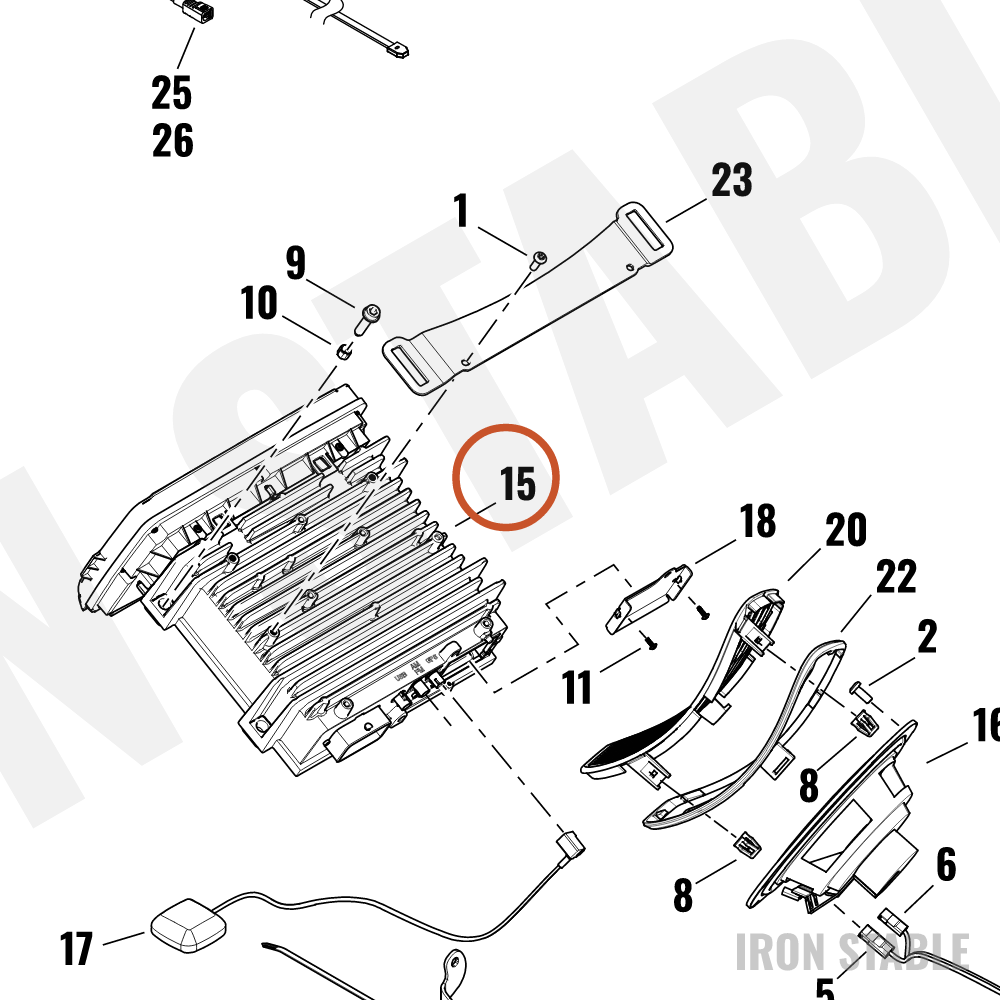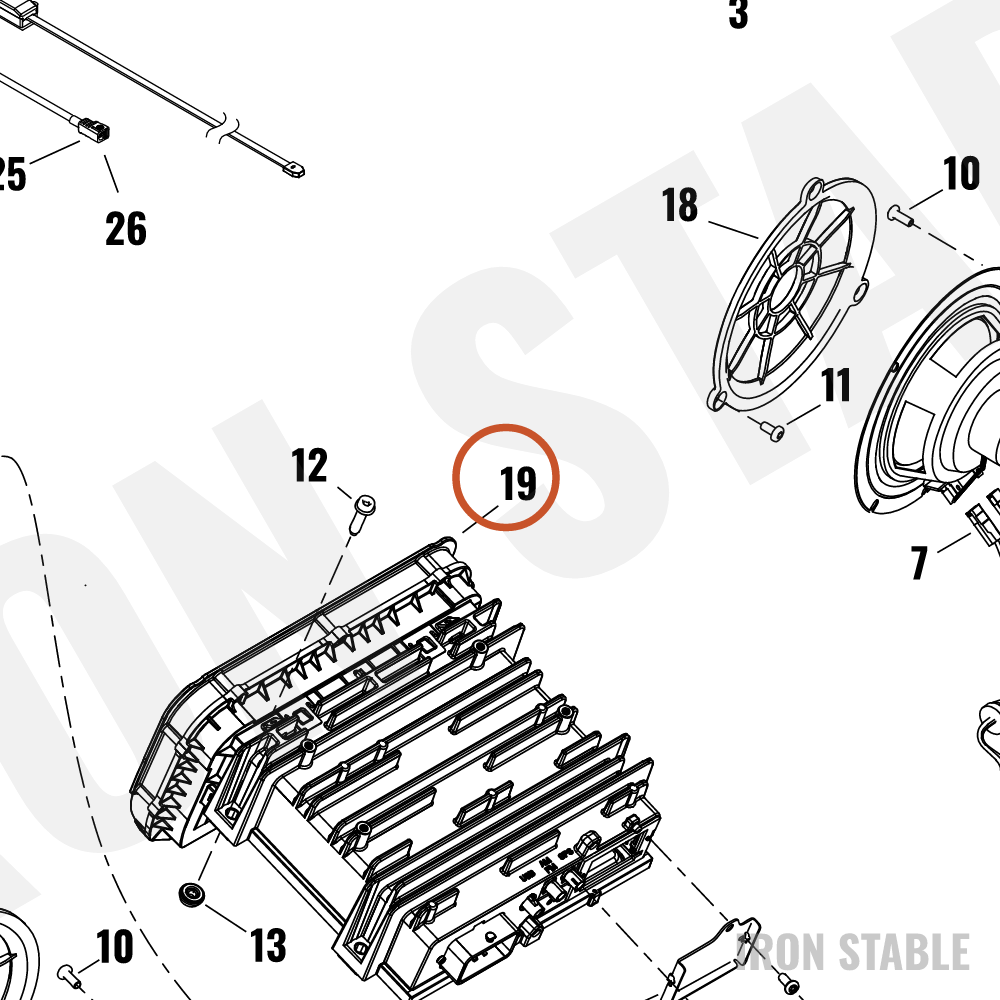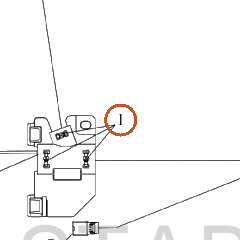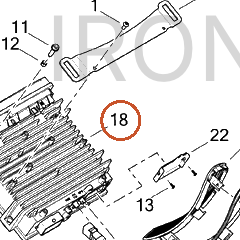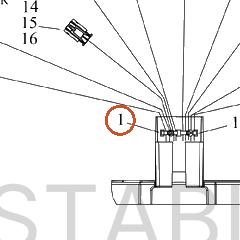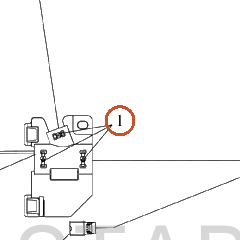
Charger, Batt, Obc, Assembly
Harley-Davidson
#66000190B
£6081.46£5473.31
Member£5169.24-15%
11,344 products
Wiring harnesses, ignition modules, stators, regulators, switches, and lighting from Namz, Athena, Dynatek, and Elektronikbox. Covers everything from a basic switch replacement through to a full custom Sportster rewire or CAN-bus Touring diagnostic parts. Namz is the go-to for plug-and-play harness work on modern models.

Or enter a custom range
Showing 1–48 of 11,344 ELECTRICAL
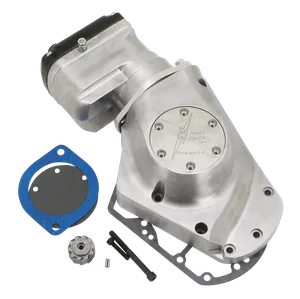
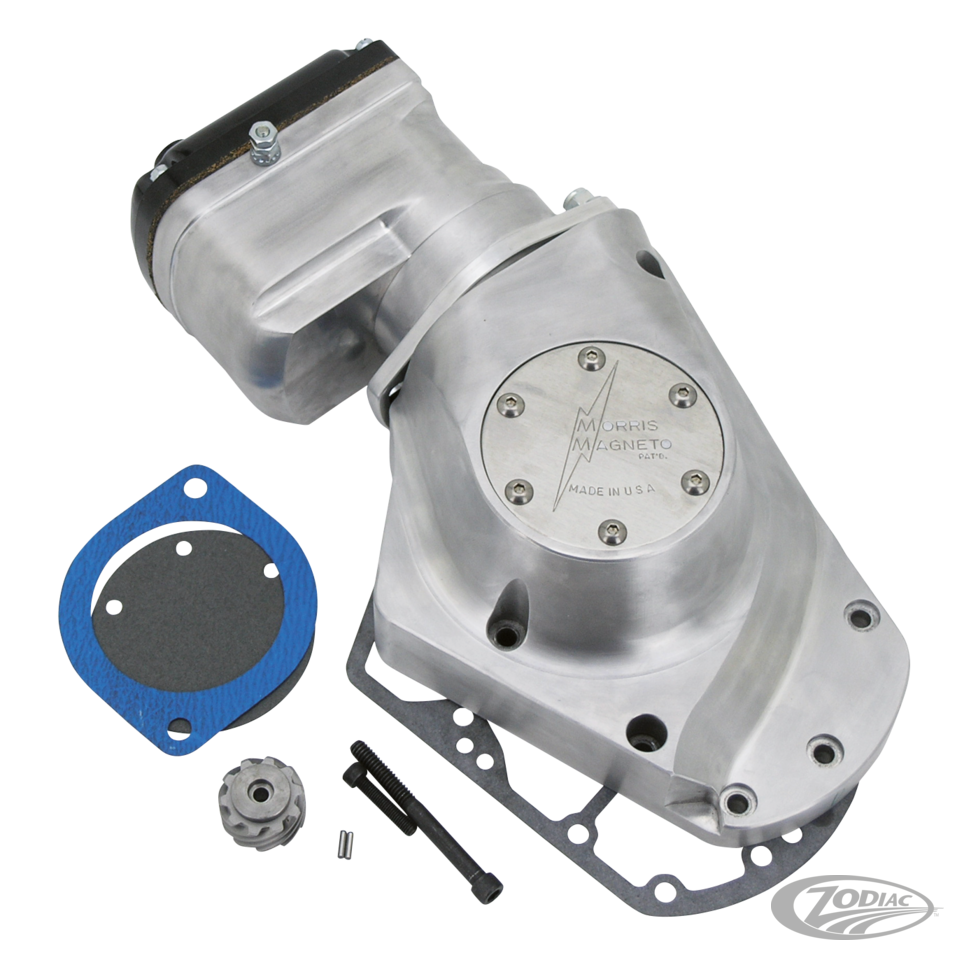
Morris Magnetos
#231710
Harley-Davidson
#69201119A
Harley-Davidson
#69201727A
Harley-Davidson
#69202793
Harley-Davidson
These two films explain rear audio upgrades within the wider electrical catalogue. Their links show only the reviewed speakers and Tour-Pak installation hardware. Batteries, lighting and other electrical components keep their existing category results and shopping paths.
Compare Stage II 5 × 7-inch and Stage III 6 × 9-inch cut-in pairs, including what modifying the original lids involves.
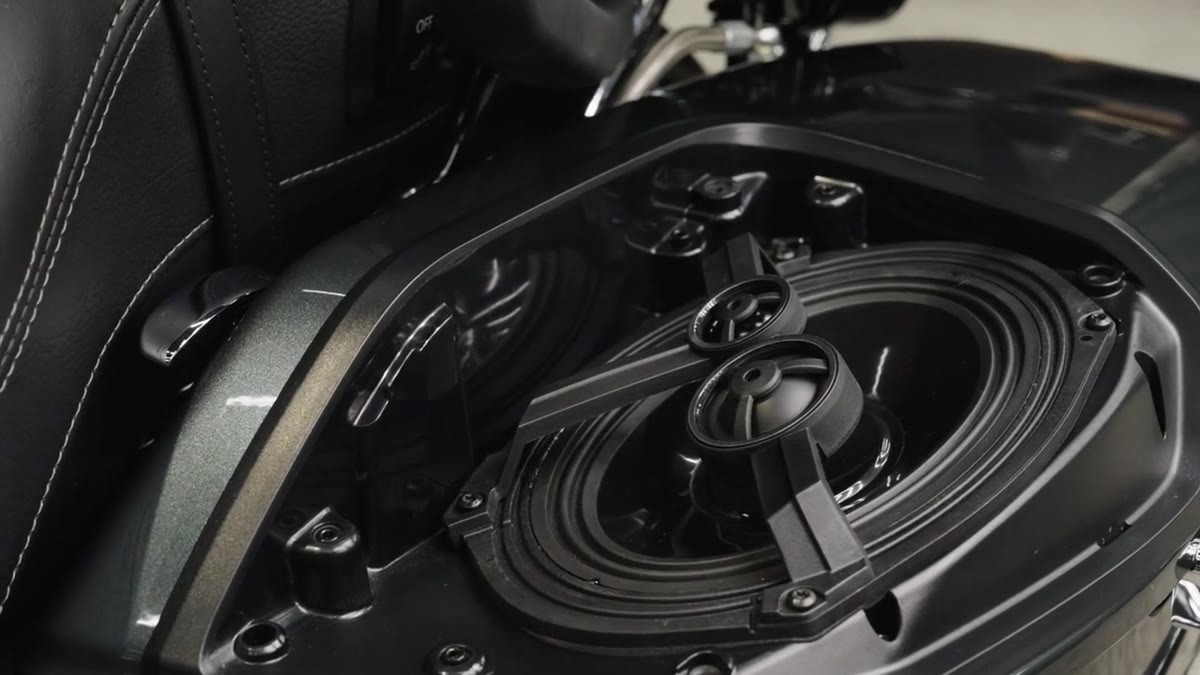
Harley-Davidson Audio powered by Rockford Fosgate places these speakers in the saddlebag lids to bring more sound around both rider and passenger. Harley-Davidson presents the upgrade as a way to increase volume and retain clearer highs, midrange and bass with less distortion at road speeds. The film compares two three-way systems: Stage II 76001555 uses 5 × 7-inch speakers rated to handle up to 150 watts each; Stage III 76001556 uses larger 6 × 9-inch speakers rated in the film for up to 250 watts each. Those figures describe speaker power handling, so amplifier choice remains a separate part of the system.
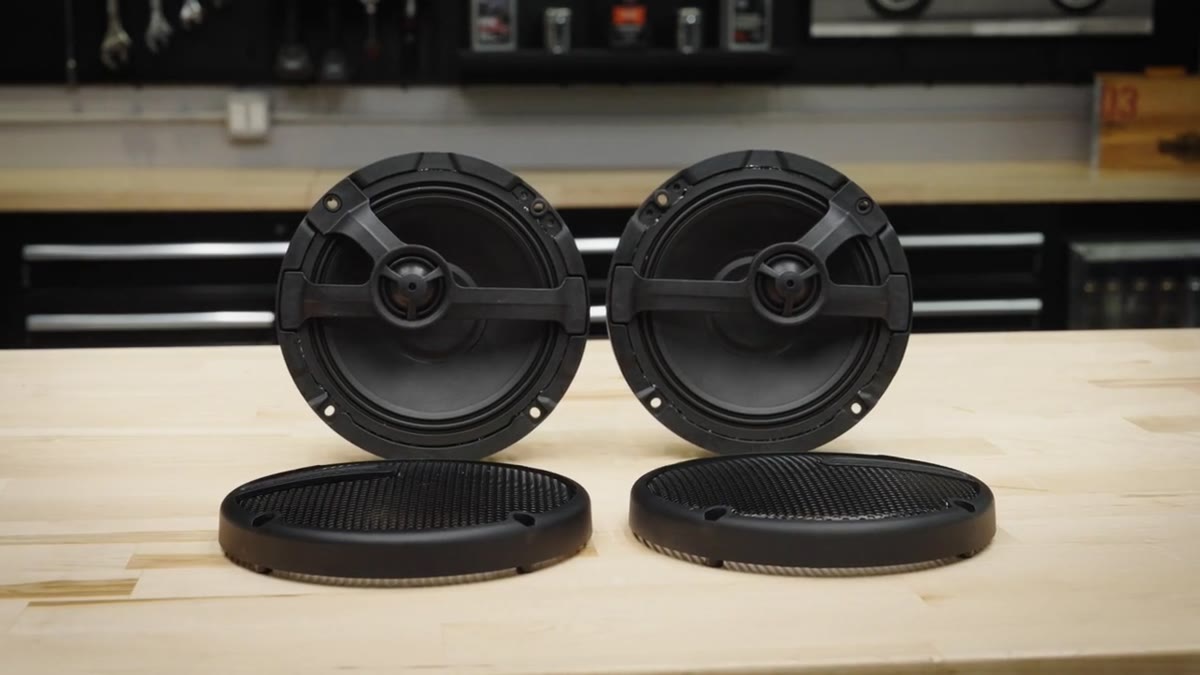
Both use injection-moulded woofer cones, with a separate bridge-mounted 30 mm midrange driver and 20 mm tweeter. The film describes high-flux N48 neodymium magnets. The 2-ohm speakers are waterproof and vibration tested, with the Element Ready design intended for exposure to water, dirt, UV and motorcycle vibration. Stage III adds Performance Red trim rings and grille inserts, as well as its larger speaker format.
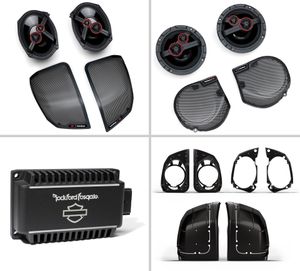
The cut-in kits retain the original saddlebag lids but require speaker openings to be cut into them. The supplied drill/cutting template guides that work; a bucket and backer form the cradle for each speaker. Left and right speakers and installation hardware are included, with the Stage III trim pieces in that version. Separately purchased moulded, colour-matched speaker lids are an alternative to modifying the original lids. The film shows the template and cradle so the mounting arrangement is clear before you choose the kit.
Both references are for the specified 2024-on Touring models with Skyline OS, excluding 2024 FLHTK and FLTRK. A separate Saddlebag Speaker Installation Kit 76001300 is required. Systems with one or two accessory speaker sets require Primary Amplifier 76001294 if not already fitted; three or four sets additionally require Secondary Amplifier 76001444 and Left Saddlebag Amplifier Installation Kit 76001385, as applicable to the existing equipment.
Harley-Davidson describes these systems as garage-ready in most cases, with configuration and fine-tuning through the Skyline OS touchscreen after installation. Check the complete amplifier and installation-kit requirements before ordering: the separate secondary amplifier’s instructions also call for Digital Technician activation and recommend dealer installation. Cutting the lids, fitting the speakers and configuring the finished audio system are distinct parts of the upgrade.
Your bike and other filters apply to the matching results.
Compare the three 6.5-inch speaker stages and the separate installation kit. The kit with pods and wiring is not a pair of speakers or a complete luggage carrier.
Adding rear speakers in a Grand Tour-Pak brings sound closer to the passenger and extends an existing two- or four-speaker system. Harley-Davidson presents the change as providing more available volume and clearer sound with less distortion at highway speeds. All three stages shown are 6.5-inch speakers, but their driver arrangements, impedance and power handling differ.
Stage I 76001512 is a two-way, 4-ohm design rated for up to 75 watts per speaker. It combines an injection-moulded woofer, high-flux neodymium magnet and bridge-mounted 25 mm tweeter, with a black grille badge. Stage II 76001513 moves to a three-way, 2-ohm design rated for up to 150 watts each, using a 30 mm midrange driver and 20 mm tweeter alongside the woofer; its grille badge is bright aluminium. Stage III 76001514 is also three-way and 2-ohm, but rated for up to 250 watts each, with a substantial N48 neodymium magnet and the same 30 mm/20 mm driver sizes. Performance Red trim rings and grille inserts identify Stage III. The film also specifies N48 magnets for Stage II.
The speakers are waterproof and vibration tested, with Element Ready construction intended to withstand water, dirt, UV and motorcycle vibration. Kits supply left and right speakers and grilles for the appropriate housings. If adding speakers to an accessory Grand Tour-Pak, installation kit 76001510 provides the speaker pods and wiring; the speakers and luggage carrier are separate purchases. This installation hardware is not an additional speaker stage.
Amplification depends on the complete system. The film describes an extra 600-watt amplifier when expanding to six or eight speakers. Current speaker requirements identify Primary Amplifier 76001294 for one or two accessory speaker sets; three or four sets also need Secondary Amplifier 76001444 and Left Saddlebag Amplifier Installation Kit 76001385, accounting for equipment already fitted. The secondary amplifier is separately specified as 600 watts. For Trikes, the speaker listings call for primary and secondary amplifiers with Trike installation kit 76001509. That kit’s own fitment is specifically 2026-on FLHLT and FLHLTSE; other Trike models need their exact installation requirements checked before purchase. Component instructions matter too: the secondary amplifier calls for Digital Technician activation and recommends dealer installation.
Grand Tour-Pak luggage and Skyline OS are essential fitment requirements. Stage I lists specified 2023-on Touring and 2026-on Trike applications; Stage II and III list 2023-on CVO Street Glide/Road Glide, specified 2024-on Touring and 2026-on Trikes. The 2024 FLHTK and FLTRK exclusions remain. Stage II is factory equipment on 2026-on FLHXLSE and FLHLTSE. Check the exact speaker and installation-kit listings for the motorcycle’s existing carrier and audio equipment, then use Skyline OS to configure the completed system as directed. The film’s “garage-ready in most cases” description does not remove those equipment and activation requirements.
Your bike and other filters apply to the matching results.
The saddlebag Stage II and III sizes differ; all three Tour-Pak stages are 6.5-inch. Tour-Pak Stage I is two-way and 4 ohms, while Stage II and III are three-way and 2 ohms. The quoted watt figures describe power handling per speaker. They do not tell you the amplifier output your motorcycle already has or make all stages interchangeable.
The cut-in kits retain and modify the original saddlebag lids using the supplied template and cradle parts. Tour-Pak installation kit 76001510 supplies pods and wiring for the specified accessory Grand Tour-Pak installation; speaker pairs are separate. Compare the contents against what is already fitted and choose the required hardware before committing to the speaker stage.
Count the complete system’s speaker sets and check the primary and secondary amplifier requirements. Skyline OS, the carrier and the exact model/year application matter. The separate secondary-amplifier instructions call for Digital Technician activation and recommend dealer installation. A film’s garage-ready description does not remove those requirements or the model-specific Trike installation-kit restrictions.
Most Milwaukee-Eight Softails specify 0.038 to 0.043 inches (0.97 to 1.09 mm) for stock plugs — always verify against your service manual, as the Evo and Twin Cam specs differ. On fuel-injected M8s the tolerance matters: a gap even slightly wide will cause misfires under load because the injection system expects precise ignition timing.
A fouled plug produces a rough idle that usually clears when the engine warms up, and it pins the fault to one cylinder. A failing coil is intermittent and temperature-sensitive — often worse when hot, sometimes cutting out under load and then recovering. Change the plug first (cheap, quick); if the misfire shifts cylinder when you swap it or persists with a new plug, the coil is next.
Yes. SE plugs are typically spec'd tighter from the factory — around 0.030 to 0.032 inches in higher-compression applications. Running them at the wider stock NGK gap will cause premature gap erosion and reduce the performance gain. Always check the SE documentation for your specific plug number; for big-bore kits in particular, confirm the gap with the kit supplier.
The rear cylinder runs hotter because it sits in restricted airflow — the front cylinder gets first crack at incoming air. That extra heat produces slightly richer combustion residue on the rear plug even when fuelling is dialled in. A moderate colour difference between cylinders is normal; a notably dark or fuel-wet rear plug is worth investigating, but don't call it a fault just because they don't match.
Read the full guide: Harley-Davidson Maintenance & Service Guide →
Free UK Delivery
On orders over £100
14-Day Returns
Easy & hassle-free
Authorised Dealer
Iron City Motorcycles
Secure Payment
256-bit encryption
You appear to be browsing from the UK.
Same parts, same prices in £, on ironstable.co.uk.
It looks like you're in Europe
Would you like to view prices in €?