Wisconsin Since 1969
Sixty-Seven Years of V-Twin Obsession
Planning S&S changes for a Dyna? Browse the Dyna Street Bob customiser before choosing parts.
Blue Island, Illinois, 1958. George J. Smith and Stan Stankos start a company building high-performance pushrods for Harley-Davidsons out of a small shop south of Chicago. They call it Smith & Stankos — S&S — and the first product is a heat-treated chromoly pushrod that doesn't bend under aggressive cam profiles, which is what every drag racer in the Midwest is asking for that year. It sells. The pushrods turn into cams, the cams turn into carburettors, and within a decade S&S is the name on every fast Harley in the country.
Marjorie Smith — George's wife — buys out Stan Stankos shortly after founding, and the company quietly becomes Smith & Smith. The name on the boxes never changes. In 1969 the operation moves out of suburban Chicago to Viola, a small town in the driftless region of southwest Wisconsin, population about 600. That's still where the head office sits. A second manufacturing facility opened in La Crosse in 2004 to handle the foundry and machining work; the engineering, dyno cells, and testing all stayed in Viola. Current president is Paul Skarie. The company has stayed independent the whole time — never sold to a parent group, never moved offshore.
What S&S sells isn't really individual parts. It's a complete performance ladder for a V-twin Harley. Stage 1 is an intake-and-exhaust kit and a tune. Stage 2 adds cams. Stage 3 brings big bore cylinders and pistons. Beyond that you start replacing the crankcase entirely with an MK or T-series case, and at the top of the stack is the crate engine — a fully assembled motor in a wooden box, dynoed before it shipped, ready to drop into a chassis. Most catalogues claim coverage of all of that. S&S actually delivers it; you can buy every step from the same brand and have it work together.
How S&S Earns the Reputation
Three things, and they're the boring ones. The casting. Crankcases, cylinders, and rocker boxes are cast in Wisconsin to tolerances tighter than the OEM equivalents — you can see the difference if you put an S&S head and a stock head on a surface plate. The dyno cells. Every crate engine is run-in and tuned on a dyno before it leaves the building, and the dyno sheet ships in the box. Most crate engines you can buy elsewhere are assembled-and-shipped; the test cell happens at your installer's expense. The race programme. S&S spent the early 2010s building pro-stock and pro-mod engines for AMA dragbike racing, and that R&D fed back into the catalogue. Today the same engineering team runs the engine programme for Indian's King of the Baggers entries.
For an Iron Stable customer that translates into something specific: when you buy an S&S 124" Power Package, you're getting a part developed against the same internal criteria as the engines that won three KOTB championships. Not because the marketing page says so. Because S&S only has one engineering team.
Bolt-In to Crate Motor
Engines & Power Packages
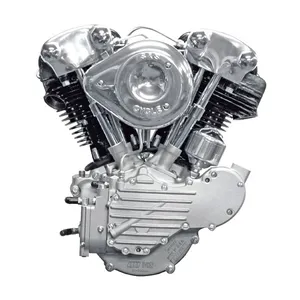
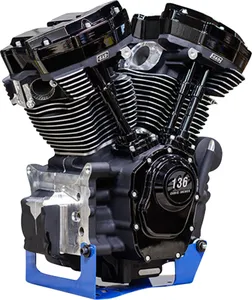
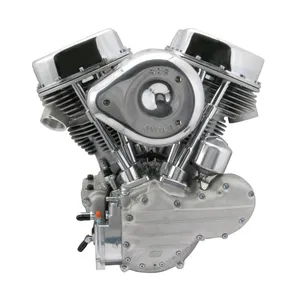
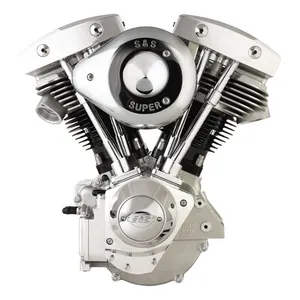
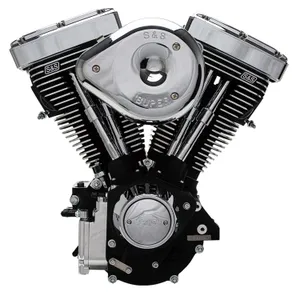
The crate engine is what S&S is known for. Big steel signs at trade shows, MK136 logos on race bikes, the wooden shipping crate every dealer in America has photographed. But the crate is the top of a much wider engine programme — and most riders never need the top. The 124" Power Package solves the same problem for a third the price.
MK Series — Crate Engines for Milwaukee-Eight
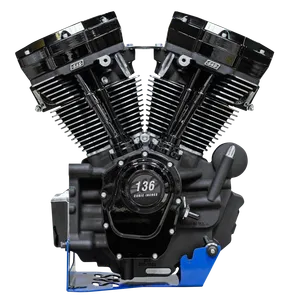
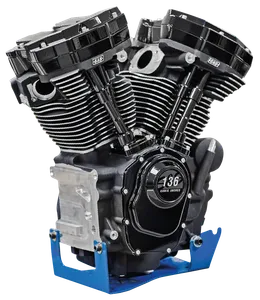
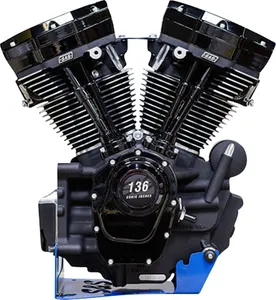
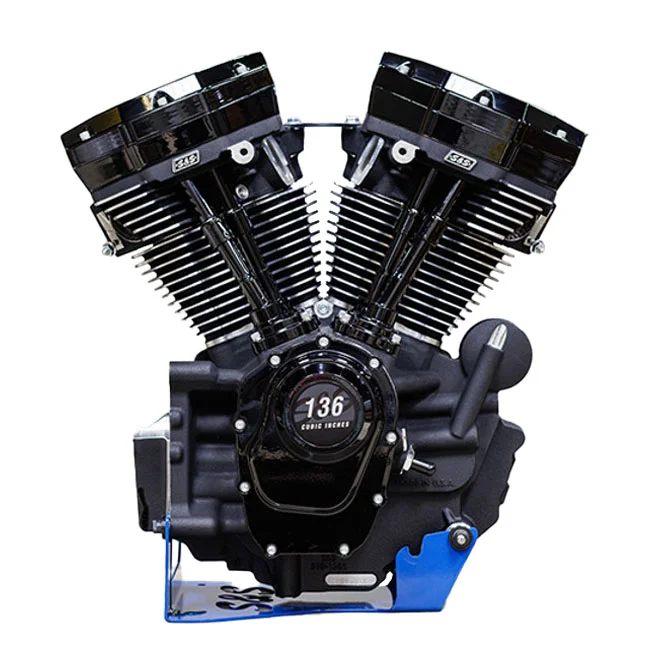
The current flagship. The MK136 and MK136B are 136-cubic-inch (2,232 cc) crate engines built around a new S&S MK case, designed from the start to drop into 2017+ Touring and Softail platforms with M8-style mounting. Black and natural finish options. The 136B variant ships with the 550G cam already installed and dyno-tuned for a flat torque curve. Cooled and oiled to handle continuous touring at full output, not just dyno pulls.
T Series — Twin Cam Long Blocks
The crate engine for 1999–2017 Twin Cam chassis. The T111 (111 ci), T124 (124 ci), and T143 (143 ci, 162 hp, 151 ft-lb) are long-block engines that bolt to the same case mounts as the OEM Twin Cam. T143 is the biggest motor S&S sells for the Twin Cam frame; it'll change a Road King's character completely. Oil-cooled or air-cooled depending on which sub-variant; check the listing.
V Series — Evo Replacement Engines
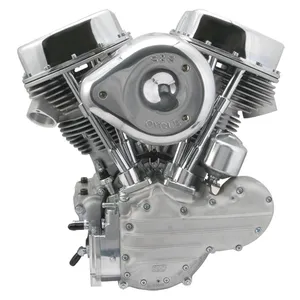
Pre-1999 Evo and earlier. The V96, V111, and V124 rebuild the older Evo platform with modern internals — same external dimensions, modern crankcase casting, current pistons and rings, dyno-tested before shipping. If you've got a Softail from 1992 with a tired bottom end, this is the route that doesn't compromise on the chassis you've spent twenty years building.
Power Packages — The Bolt-In Big Bore
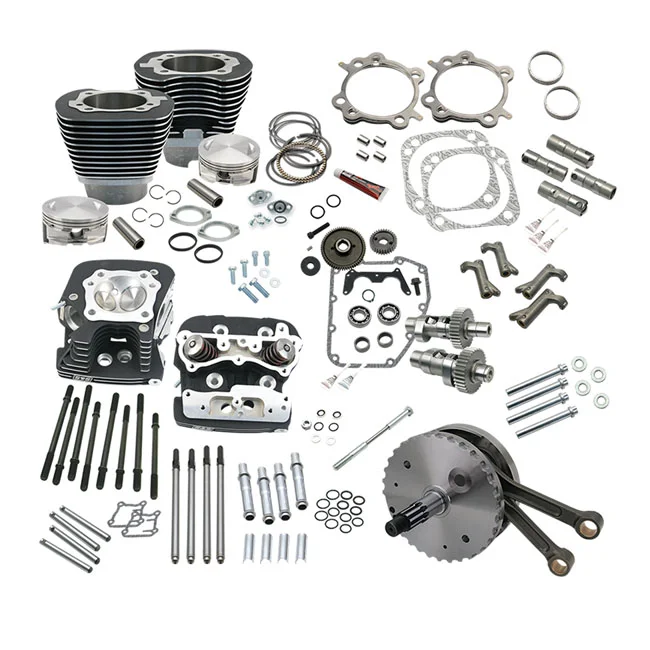
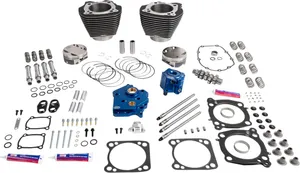
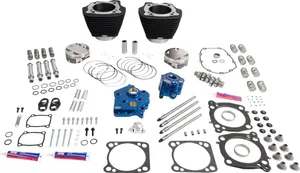
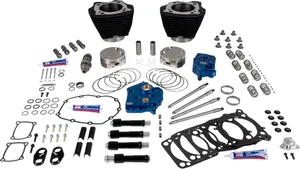
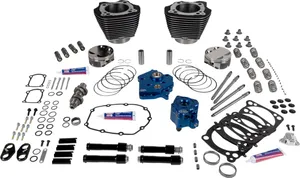
For people who don't need a full crate motor. The 124", 128", 129", and 132" Power Packages are bore-and-cam kits that fit your existing M8 crankcase. They ship with cylinders, forged pistons, gaskets, head work, and matched cams. Add 11–18 cubic inches without splitting the cases. A workable installer can fit one in a long weekend. Tune is mandatory — every S&S kit needs a Power Vision or equivalent.
X-Wedge — The Custom-Builder Platform
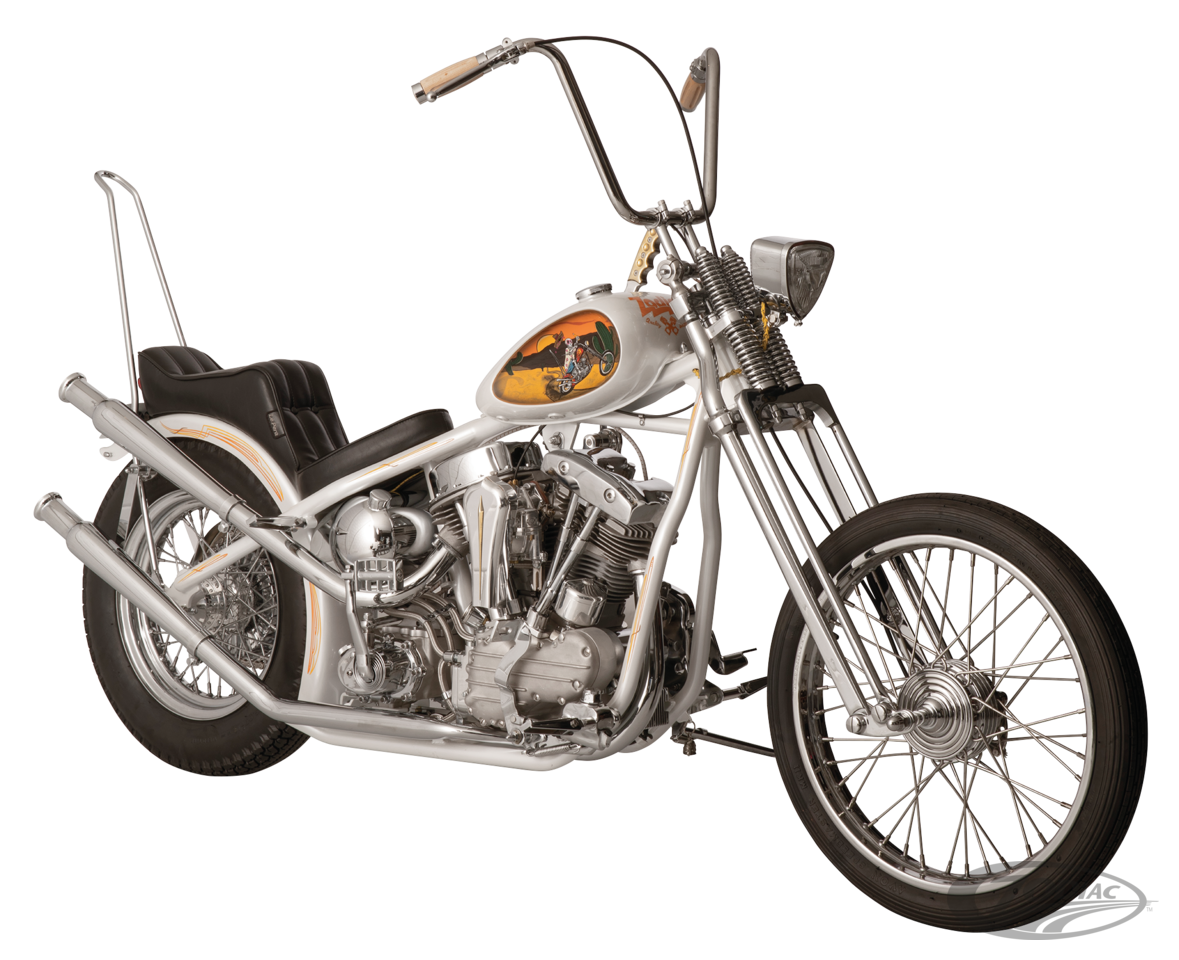
Not a Harley engine. S&S X-Wedge is a 117"–132" V-twin built for custom chopper frames, prostreet builds, and one-off projects — it's the engine that appears in a lot of Arch and West Coast Choppers builds. The catalogue stocks X-Wedge cases, cylinders, and intake parts for builders who want a non-Harley V-twin without building from scratch.
How the Engine Breathes
Air & Fuel
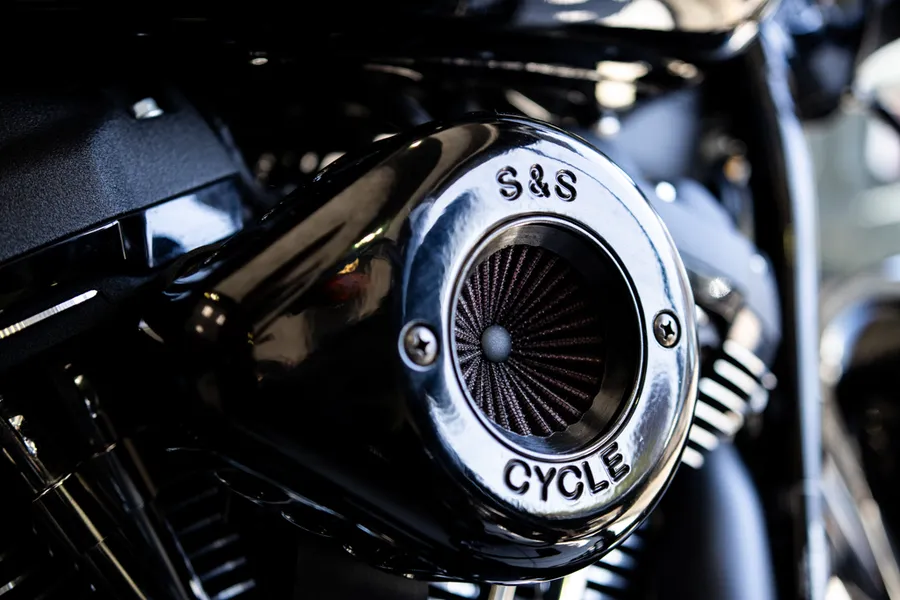
Two halves of the same problem. Get more air into a Harley engine — Super E or Super G carb on a carbureted bike, Stealth or Tuned Induction on an EFI bike — and the bottom-end torque comes alive even before you touch the cams. S&S have made every notable performance carburettor for the V-twin world for forty years, and they make the air cleaner that goes in front of it. The two are designed against each other.
Carburettors
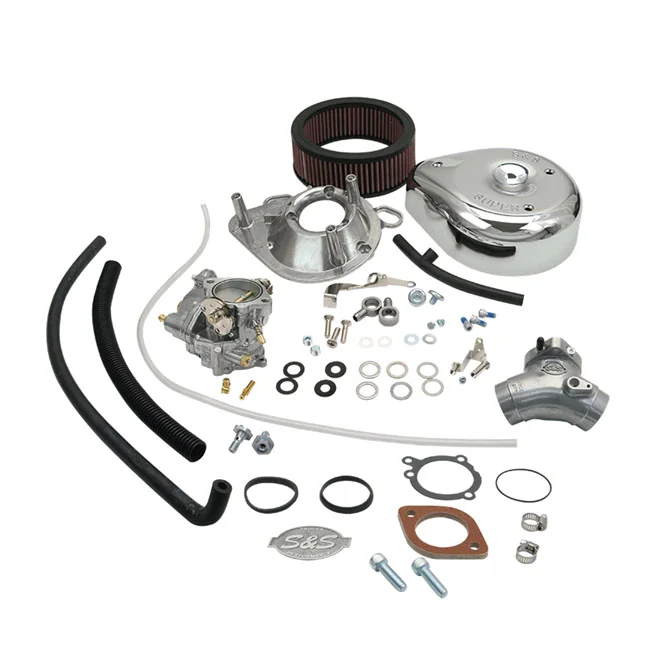
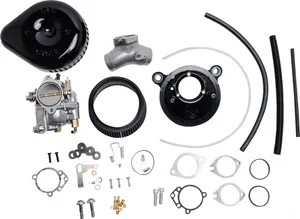
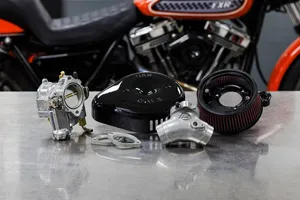
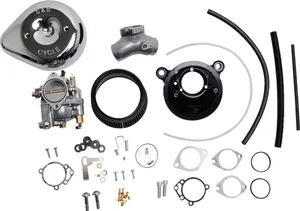
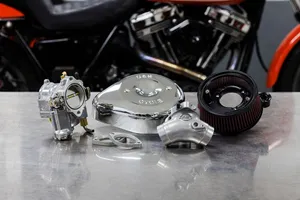
The Super E and Super G are the carbs that built S&S's reputation. Butterfly design, fully tunable, hand-assembled. Super E is the smaller-bore option for stock-displacement Twin Cam, Evo, and Shovelhead bikes; Super G is the bigger-bore version for stroker motors and big bore builds. Both come as kits with an air cleaner and intake manifold included — fit one and the bike runs. Honest answer: the Super E is overkill on most stock builds. That's the point. It scales with the engine when you upgrade, so you don't replace the carburettor every time you go up a cubic-inch tier.
Beyond the kit carbs, the catalogue covers every wear part you'll want to keep one running — jets in five sizes, accelerator pump diaphragms, idle screws, throttle plates, gaskets. Most Super E/G builds need new jets within the first two services as you tune to climate and fuel.
Air Cleaners
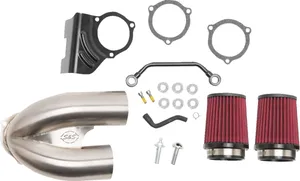
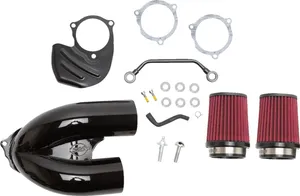
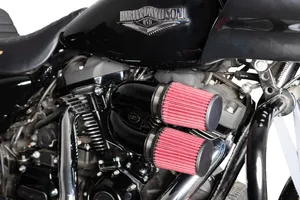
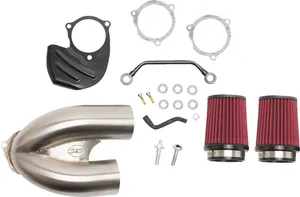
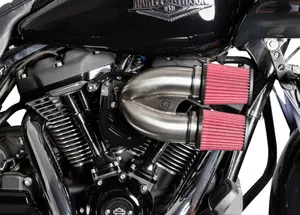
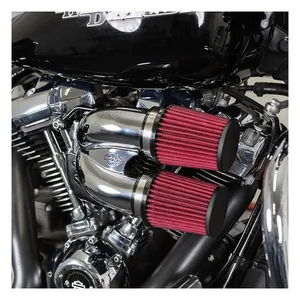
Stealth Air Stinger is the current flagship — high-flow, OEM-cover form factor, with the patented stinger venturi inside that accelerates inlet air rather than just removing the airbox restriction. It's the design every other open air cleaner copies without licensing. Available in chrome, gloss black, matt black, with a teardrop or round filter cover. Tuned Induction is the higher-flow, less-stealth variant — exposed cone filter, designed for Power Package builds where airflow is the bottleneck. Mini Teardrop is the smallest profile, for narrow Sportster applications where a full Stinger fouls the rider's leg.
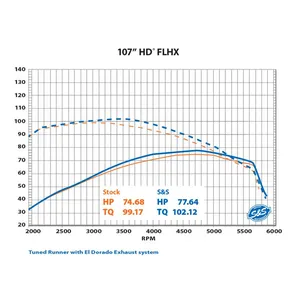
Whichever cleaner you fit, pair it with a tune. The air cleaner alone is worth a few horsepower over a stock airbox; the air cleaner plus a tune doubles that. Without a tune you're trading airflow for fuel ratio drift, which the bike will compensate for in the wrong direction.
Cams Decide the Build
Cams & Valvetrain
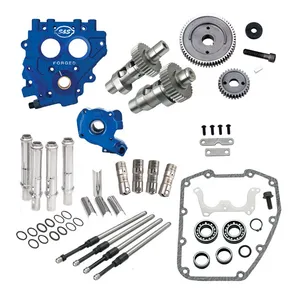
The single biggest characteristic shift you can make to a Harley engine isn't the bore. It's the cam. A 510 cam and a 640 cam in the same 124" Twin Cam build feel like two different motors — one all bottom-end pull, the other a top-end charger. S&S cams are sold in profiles tied to specific use cases, not arbitrary numbers, and the codes tell you what each one is for once you can read them.
Twin Cam — The 475/510/551/585 Family
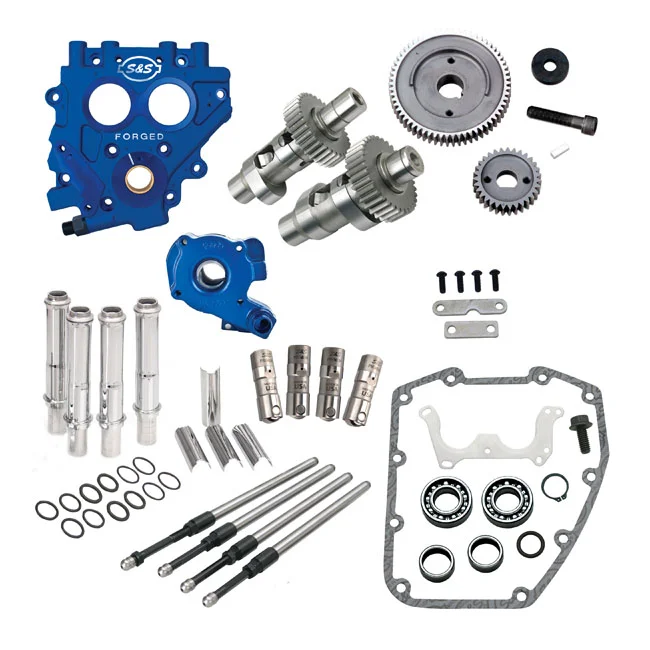
Twin Cam (1999–2017) takes a pair of bolt-in cams. 475 and 510 are mild upgrades — keep stock springs and pushrods, add 8–12 hp, no other engine work needed. 551 is the popular mid-tier; it's what most Stage 2 builds end up with. 585 is a full Stage 3 cam — needs upgraded valve springs and adjustable pushrods to run safely. Every cam is sold in gear-drive (G/GE) and chain-drive variants — gear is mechanically more accurate at high RPM, chain is quieter and cheaper.
Milwaukee-Eight — The 465/475 + Cam Chest Kits
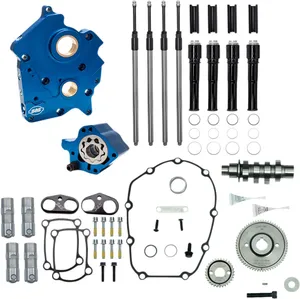
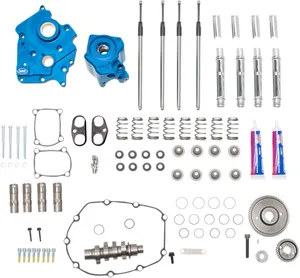
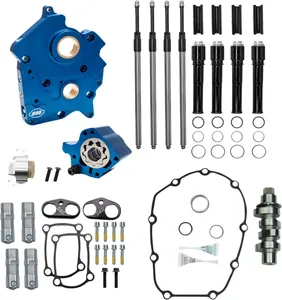
M8 (2017+) is harder to cam than the Twin Cam — the cam chest is more complex, and the change involves the chain drive plus the inner cam plate. S&S sell complete cam chest kits that include cams, plate, oil pump, and gaskets — one box, one fitting session. The 465 and 475 profiles are the popular M8 grinds; pair them with a 124" or 128" Power Package and the results match a much more expensive crate engine on everything except sustained-load durability.
Cam Codes — How to Read Them
Three numbers and a letter or two. 475G is 0.475" lift, gear-drive. 551GE is 0.551" lift, gear-drive, easy-start (a gentler ramp on the exhaust opening that prevents kickback on high-compression motors). 585R is 0.585" lift, roller. Most installers go GE for anything above 510 lift on a kick-start or push-button-start build over 100 cubic inches. Read the listing carefully — a wrong cam pick is a thousand-pound mistake.
Headers, Pipes, Mufflers
Exhaust
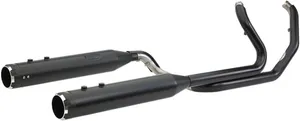
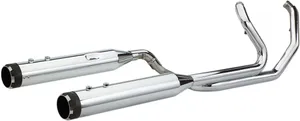
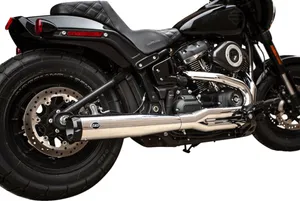
Exhaust is the easiest mistake to make on a Harley. The factory takes the long way round for emissions reasons; aftermarket goes the short way for sound reasons. The Qualifier 2-1 and the Power-Tune duals are the systems that take the long way and still deliver the gain, tuned by people who own dynos. CARB-legal options exist for US export. UK and EU riders get the full performance line.
Mufflers & Slip-Ons
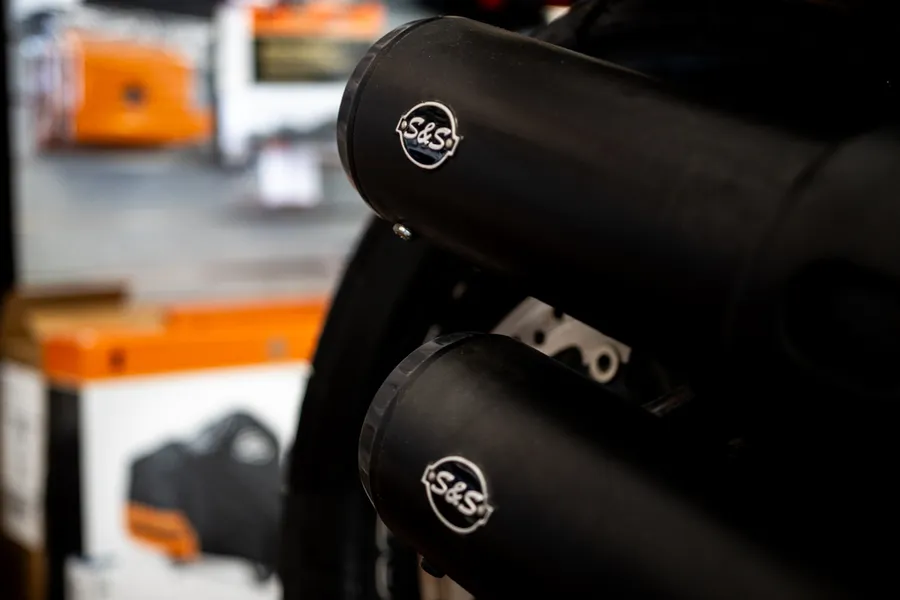
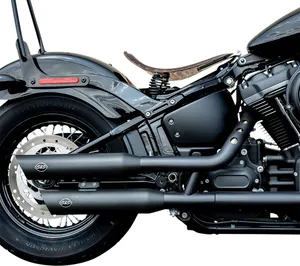
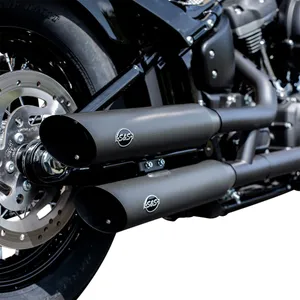
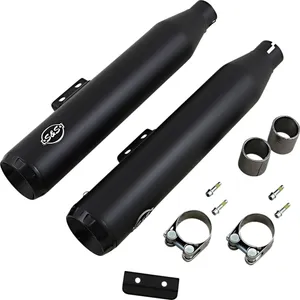
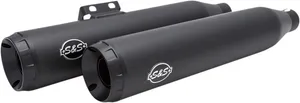
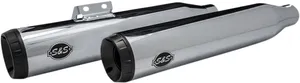
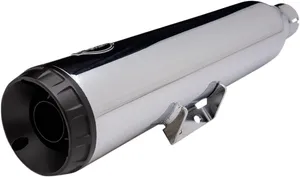
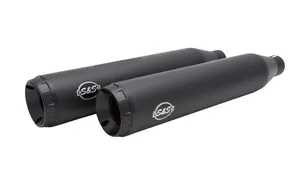
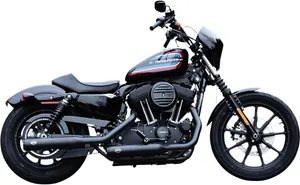
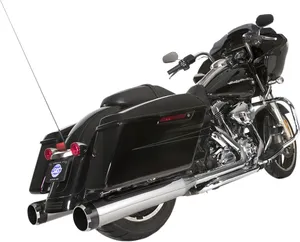
Slip-ons are the first thing most Harley owners change. Stock mufflers are heavy, restrictive, and quiet enough that you wonder if it's running. S&S do Grand National 4" slip-ons with a louvered baffle (the louder option), MK45 with a quieter baffle for residential streets, and the 50-state legal slip-ons that pass CARB. All are direct-fit on Touring head-pipes.
The trade-off worth understanding: a slip-on changes the sound and saves weight. It doesn't, on its own, free up much horsepower — that takes a head pipe change too. If gain is what you want, skip the slip-on and look at full systems.
Headers & Full Systems
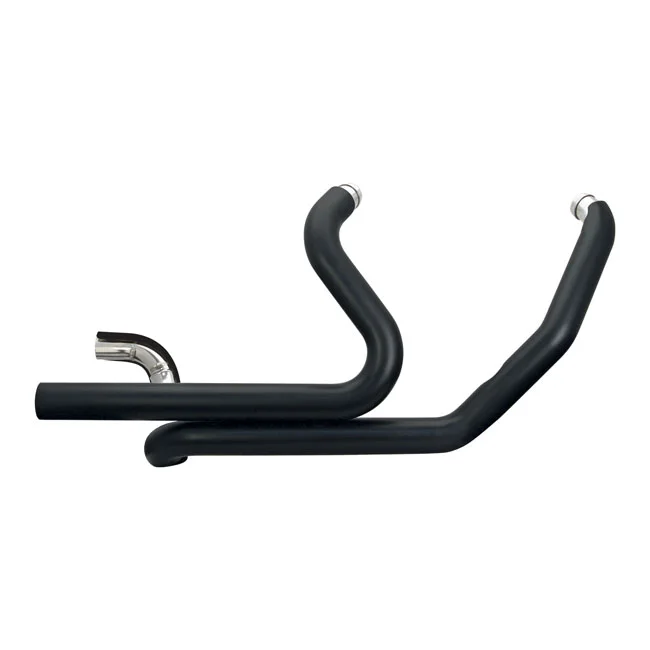
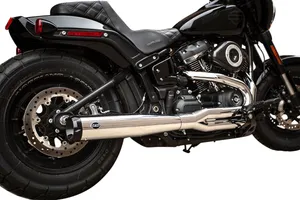
Power-Tune duals replace the stock head-pipes with merged-collector pairs designed against scavenging losses on Twin Cam and M8 — the section the slip-on doesn't touch. Qualifier 2-1 is the current flagship: a true 2-1 merge collector, full 50-state legal variants for specific M8 fitments, and the system Indian's KOTB team developed against. Drag pipes, side-by-side duals, and shorty systems round out the catalogue for cruiser builds where appearance matters as much as gain.
A full system plus a tune is worth 12–18 hp on most M8 builds before you touch the bore. That's bigger than any slip-on can deliver on its own.
Mission King of the Baggers
Proven on the Grid
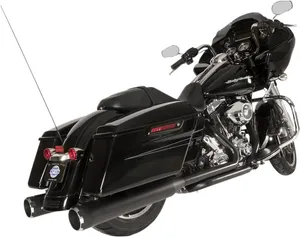
The 2025 MotoAmerica Mission King of the Baggers championship had three S&S-powered riders on the Indian Motorcycle Wrecking Crew: Loris Baz, Troy Herfoss, Tyler O'Hara. Indian had won the previous three KOTB titles outright using S&S engines that consistently outpowered the bigger-bore Harleys. The 2025 season went down to the wire — Kyle Wyman ultimately took the title for Harley-Davidson at New Jersey, his second crown — but the three-bike S&S/Indian effort kept the championship competitive into the final round.
For 2026, S&S have committed to a $31,500 contingency programme for KOTB competitors running their parts. The same engineering team that builds the race motors signs off on the Power Packages we sell, and the same dyno cells run both. There's not a separate race-only catalogue; the parts that win on Sunday ship to your door on Monday.
Made in Wisconsin
Cast, machined, and dyno-tested in Viola and La Crosse. Every crate engine ships with the dyno sheet from its run-in.
Dyno-Tested
In-house dyno cells run every complete engine before it leaves the building. Not an option, not a service — standard.
Independent Since 1958
Sixty-seven years, never sold to a parent group, never moved offshore. Same engineering team across the catalogue and the race programme.
Race-Proven
Same parts that powered three Mission King of the Baggers titles for Indian. Race programme and catalogue share the same engineers.
Common Questions
S&S Cycle FAQ
Where is S&S Cycle made and how long have they been around?
Will an S&S big bore kit void my Harley factory warranty?
What's the difference between an MK136 crate engine and a Twin Cam 124?
Do S&S Power Packages need a custom tune?
Is the S&S Qualifier 2-1 50-state legal?
Can I run an S&S Super E or Super G carb on a fuel-injected M8?
What does the G or GE in S&S cam codes (475G, 551GE, 585GE) actually mean?
What's the warranty on an S&S complete crate engine?
Will an S&S T143 fit a 2008 Harley Touring frame?
Are S&S Stealth Air Stinger cleaners street-legal in the UK?
How does S&S compare to Screamin' Eagle for big-bore work?
Do you ship S&S Cycle parts to the UK and EU?
Key Terms Explained
S&S Glossary
- Big Bore
- A cylinder upgrade that increases the engine's displacement by enlarging the bore — typically 124", 128", 132", or 135" on a Milwaukee-Eight that started at 107", 114" or 117". Done with new cylinders and pistons; case stays.
- Stroker
- An engine that adds displacement by lengthening the stroke — different from a big bore, which adds it through diameter. Strokers usually need a new flywheel assembly and case work; bigger commitment than a bolt-in big bore.
- Crate Engine
- A complete, dyno-tested engine in a wooden shipping crate, ready to drop into a chassis. Includes everything from cases up to rocker covers. S&S crate engines all ship with the dyno sheet from their run-in.
- Long Block
- An engine sold without intake, exhaust, ignition, fuel system, or covers — the bottom end and the heads, fully assembled. You bolt your existing or chosen accessories to it. Cheaper than a complete crate engine. T124, T143 are S&S long blocks.
- Hot Set-Up Kit
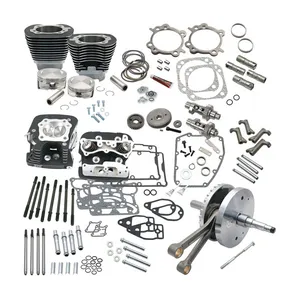
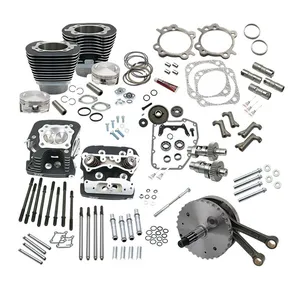
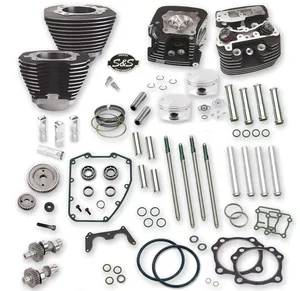
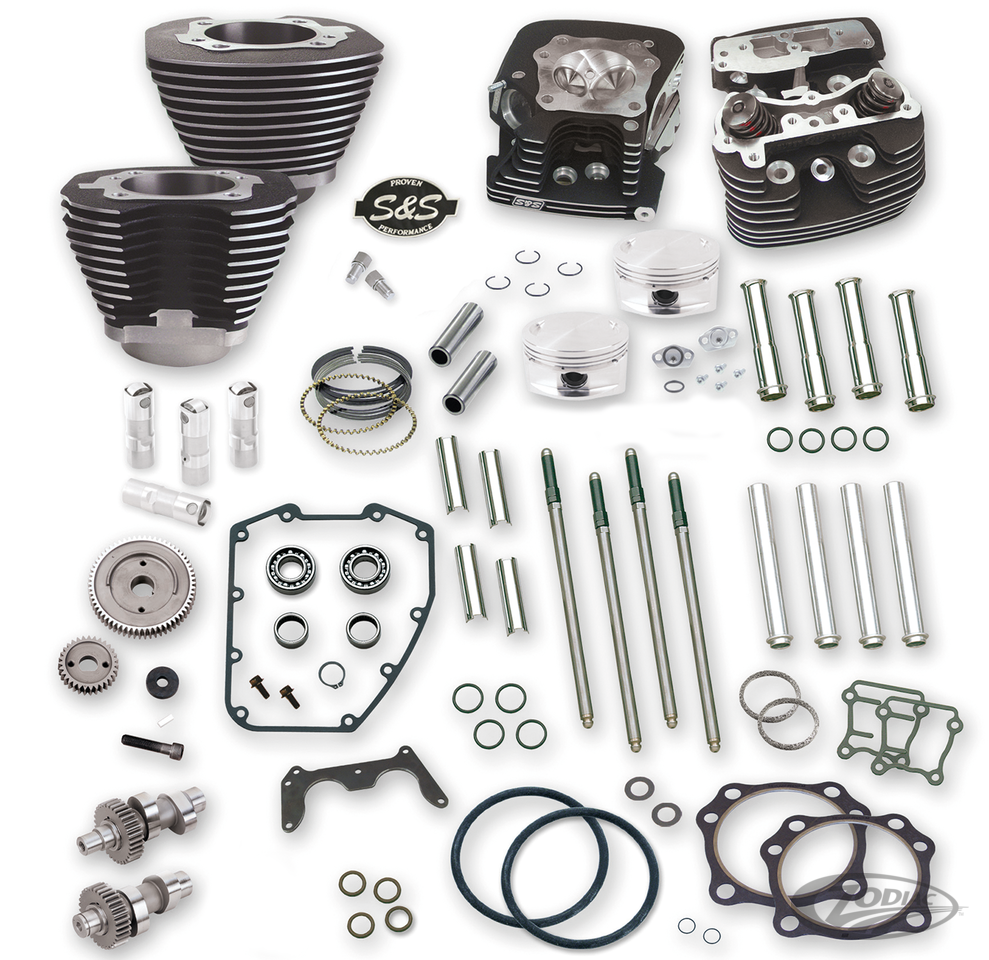
- The S&S name for a complete bore-and-cam package that includes heads. Ships with cylinders, pistons, gaskets, head work, and matched cams. The ready-to-fit Stage 3 build for Twin Cam and earlier.
- Power Package
- The current name for the M8 bolt-in big bore kit. 124"/128"/129"/132" variants. Includes cylinders, pistons, gaskets, head work, and cams designed for the new bore. Tune required.
- MK Series
- The current crate engine line for Milwaukee-Eight platforms. MK136 (136 ci) and MK136B (with 550G cam pre-installed). Built around a new S&S MK case with M8-style mounting.
- T Series
- The Twin Cam long-block crate engines. T111 (111 ci), T124 (124 ci), T143 (143 ci, 162 hp). Bolt to the same case mount points as the OEM Twin Cam in 1999–2017 chassis.
- V Series
- The Evo replacement crate engines — V96, V111, V124. Same external dimensions as the OEM Evo, modern internals, dyno-tested. The right answer when an older Softail or Dyna's bottom end is past saving.
- X-Wedge
- S&S's own non-Harley V-twin engine, sold to custom builders. 117"–132" displacement. Used in Arch, West Coast Choppers, and one-off prostreet builds. A separate parts catalogue from the H-D engines.
- Super E / Super G
- Carburettors. Super E is the smaller bore (1-7/8" throat) for stock-displacement Twin Cam, Evo, and Shovelhead. Super G is the bigger bore (2-1/16") for stroker and big bore engines. Butterfly design, fully tunable, kit includes air cleaner and intake manifold.
- Stealth Air Stinger
- The current flagship S&S air cleaner — high-flow, OEM-cover form factor, with the patented stinger venturi inside. The design every other open air cleaner copies.
- Tuned Induction
- Higher-flow, less-stealth air cleaner — exposed cone filter — for Power Package builds where airflow is the bottleneck.
- Qualifier 2-1
- The current flagship S&S exhaust system — true 2-1 merge collector. 50-state legal variants for specific Milwaukee-Eight Touring fitments. The system Indian's KOTB team developed against.
- 50-State Legal
- An exhaust or intake variant that passes CARB (California Air Resources Board) emissions requirements alongside the federal ones. Carries an EO number printed on the part. Important for US sales; UK and EU riders look at noise and Euro homologation instead.
- Twin Cooled
- Harley's M8 Touring engine with cylinder-head water cooling — the 107", 114", and 117" Twin Cooled variants. Different jacketry from the air-cooled M8; some S&S kits are Twin Cooled-specific. Check the listing.
- Twin Cam
- Harley's 1999–2017 engine platform. Two cams in the cam chest (hence the name). 88", 96", 103", 110" displacement variants. Replaced by the Milwaukee-Eight in 2017 Touring, 2018 Softail.
- Milwaukee-Eight (M8)
- Harley's current engine platform, 2017 Touring and 2018 Softail onwards. Eight valves total — one intake, one exhaust per cylinder, four valves per cylinder. 107", 114", 117" factory displacements; S&S sell upgrades to 124"–135".
- 475G / 551GE / 585R
- Cam codes. Number is lift in thousandths of an inch (475 = 0.475"). Letter codes drive type: G is gear-drive, GE is gear-drive easy-start, C is chain-drive, R is roller. Higher lift = more power but more demand on springs and pushrods.
- Cam Chest Kit
- A complete bolt-in package for cam upgrades on Milwaukee-Eight — cams, inner cam plate, oil pump, and gaskets. Sold as a kit because the M8 cam change involves more than just the cam itself.
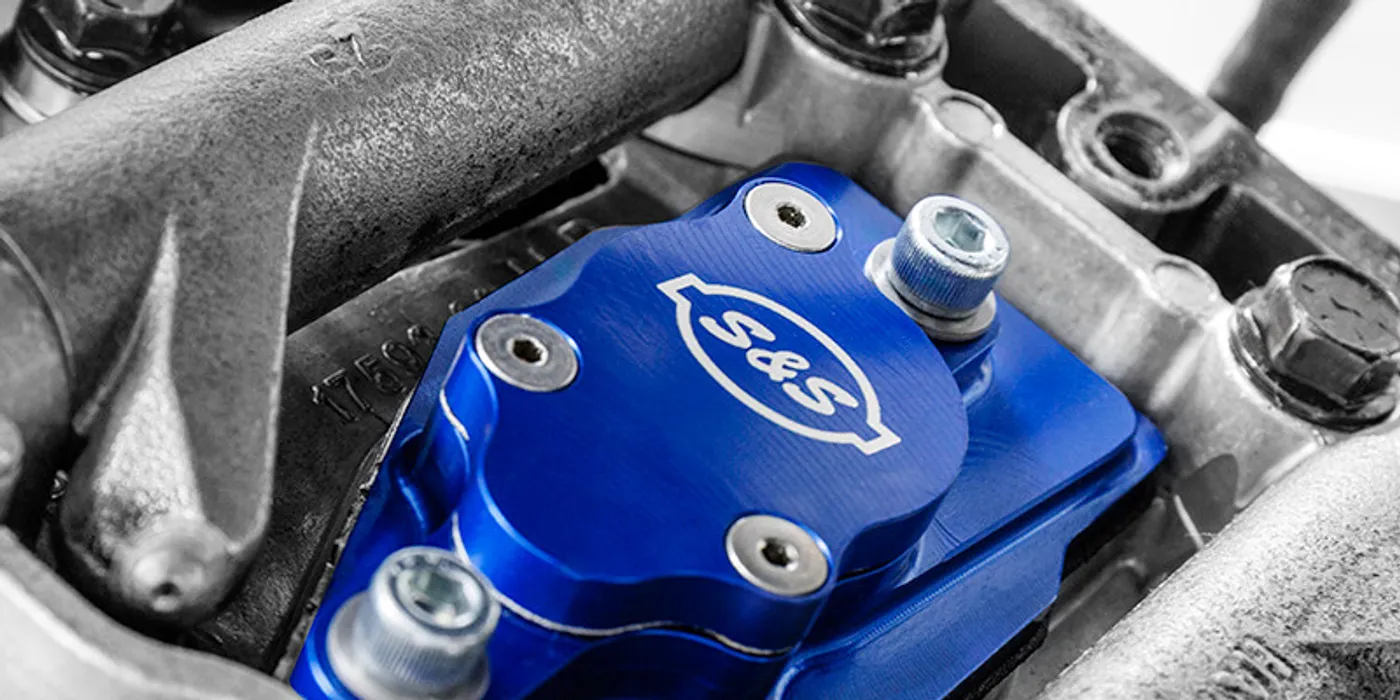
Made in Wisconsin. Used everywhere.
Build Your Bike for Real Power
Browse 2,286 S&S Cycle parts — crate engines, big bore Power Packages, Super E/G carbs, Stealth air cleaners, cam chest kits, Qualifier exhaust. Whether you're going from stock to Stage 1 or building a 143-cubic-inch T-series motor, the catalogue covers it. Iron Pass members get an additional discount at checkout.