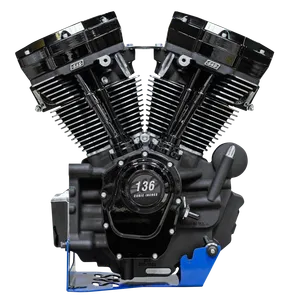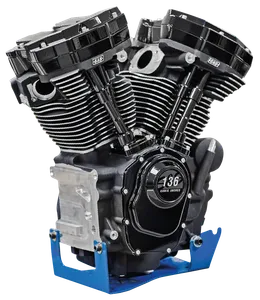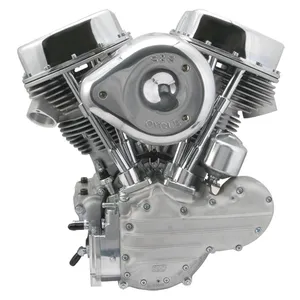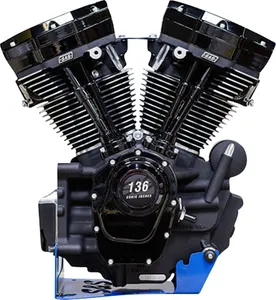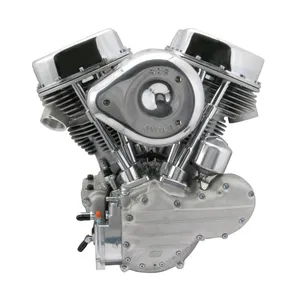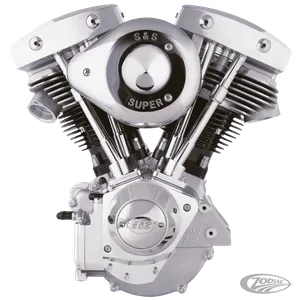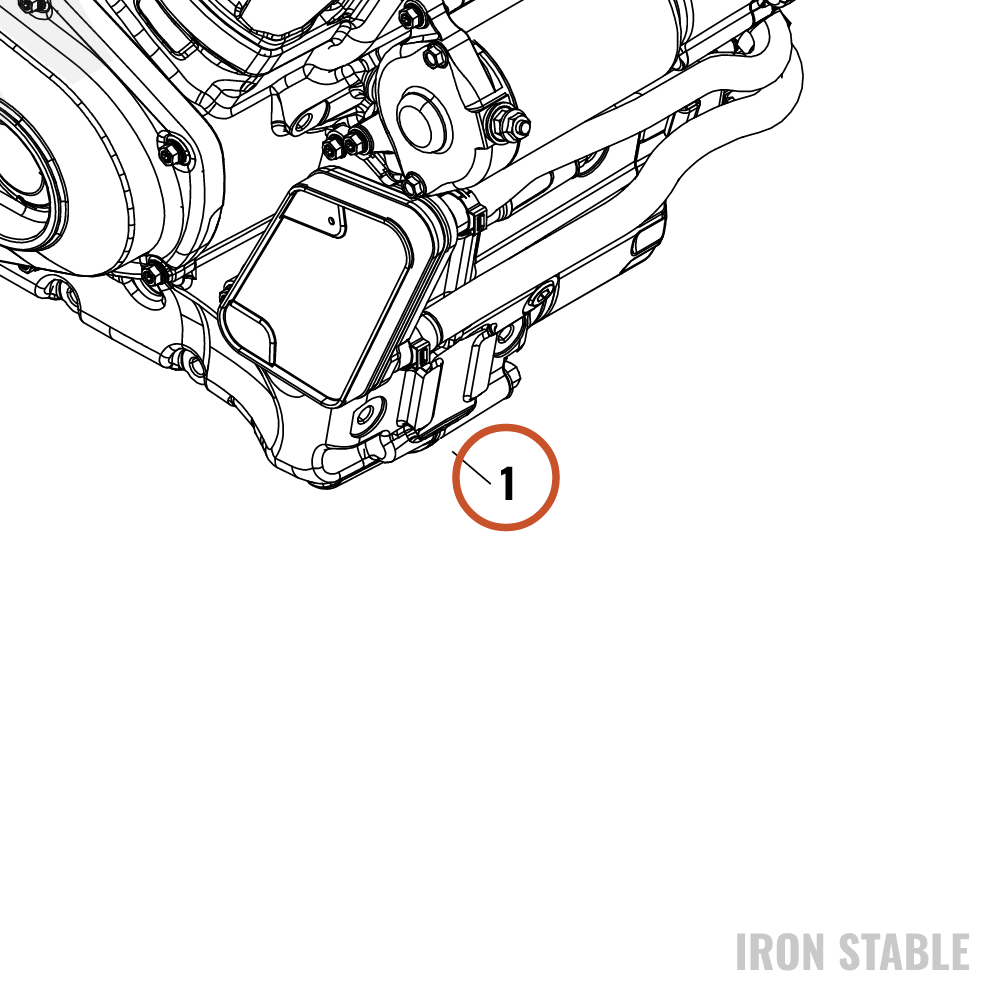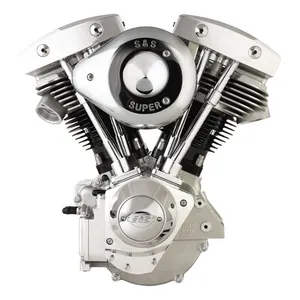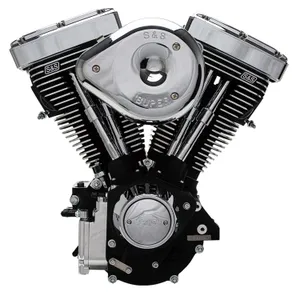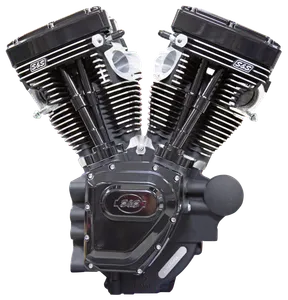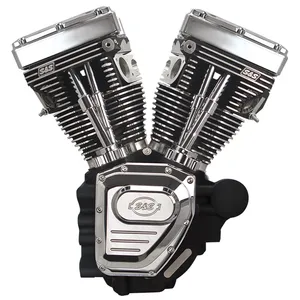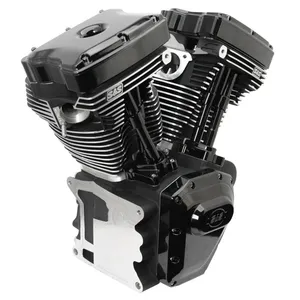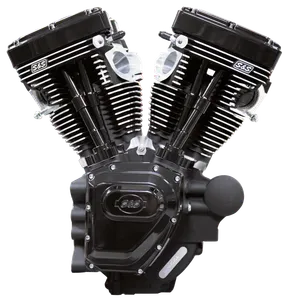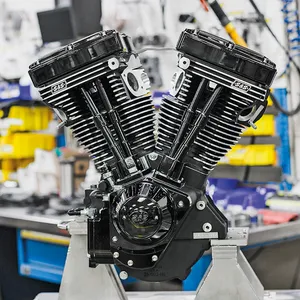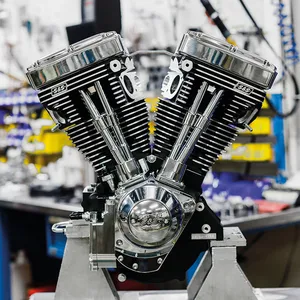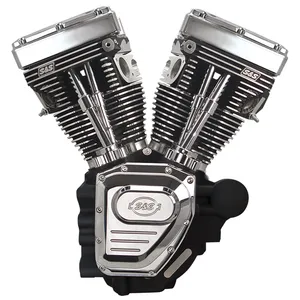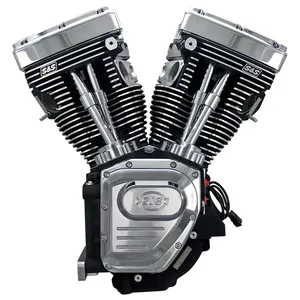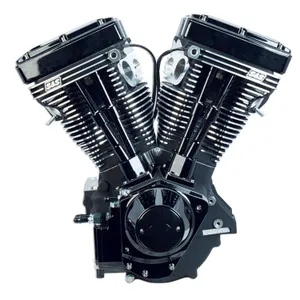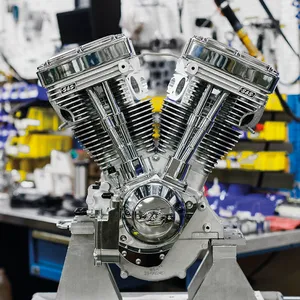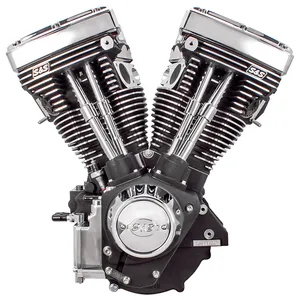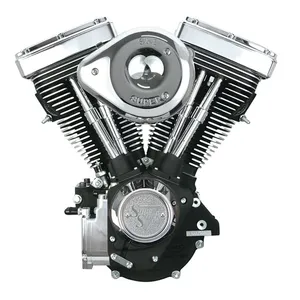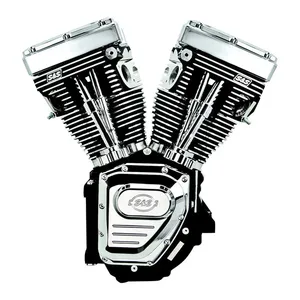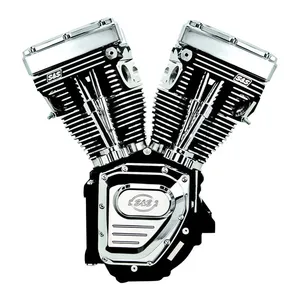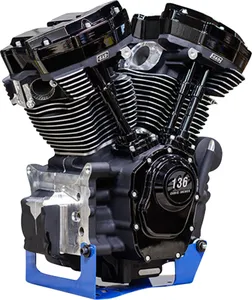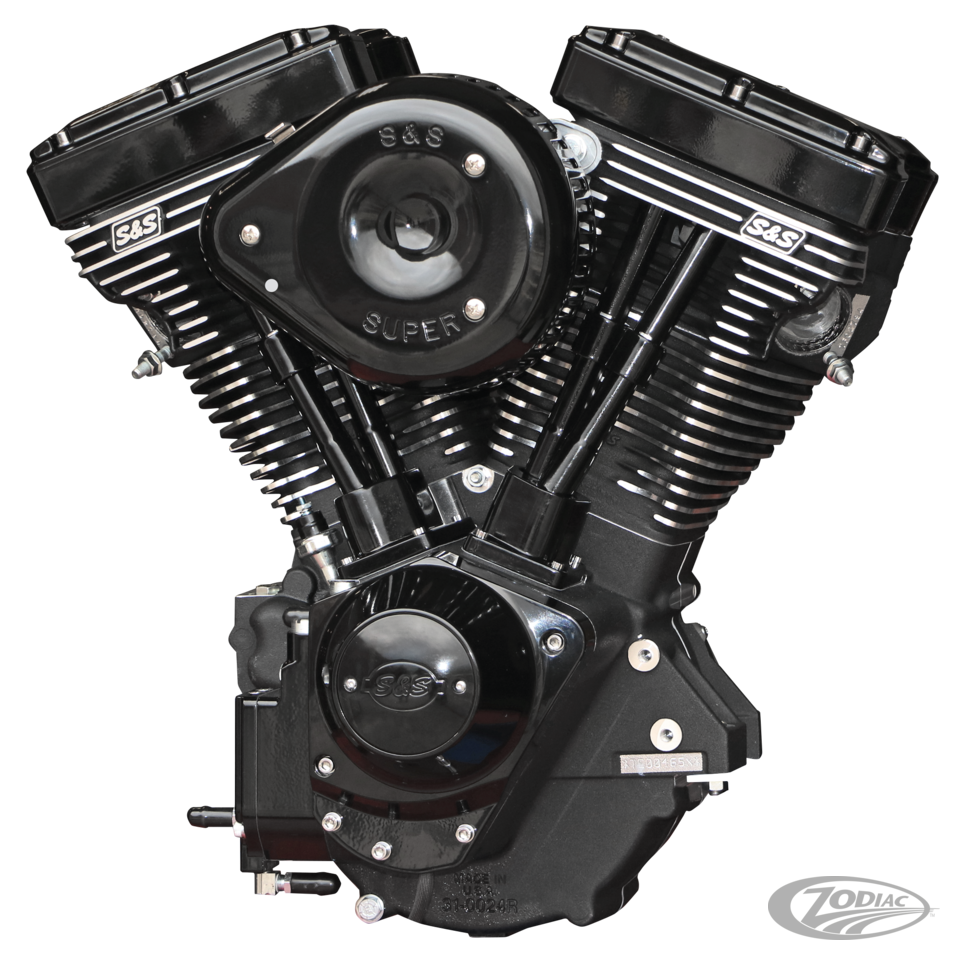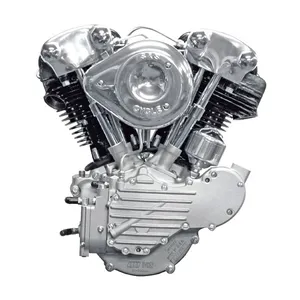
S&S, 93" KN-series engines. Generator cases
S&S
#106-2161
€16545,99€14890,99
Membre€14063,99-15%
7 551 produits
Pistons, cylindres, arbres à cames, tiges de culbuteurs, caches culbuteurs, composants de distribution et kits de réfection complets. Athena couvre les pochettes de joints et kits cylindres ; S&S fournit les internes hautes performances ; MCS assure les pièces d'entretien courant. Compatibilité du Shovelhead à l'Evolution Big Twin jusqu'au Milwaukee-Eight. Pour une réfection complète, vérifiez cylindrée et taux de compression avant de commander les pistons.

Or enter a custom range
Affichage de 1–48 sur 7 551 MOTOR PARTS
Harley engine parts divide by generation — Evolution 1984–99, Twin Cam 1999–2017, Milwaukee-Eight since 2017, plus the Evo Sportster running alongside — and each generation has one story every owner eventually learns.
Early Twin Cams tension their cam chains with spring-loaded shoes faced in plastic composite, and those shoes wear — silently, with the debris heading for the oil pump. Harley moved to hydraulic tensioners with the 2006 Dyna and everything else in 2007, so the standard refresh on a 1999–2006 engine became a package: hydraulic-conversion cam plate, high-volume oil pump, new tensioners and, while the cam chest is open, the inner cam bearings — the stock caged bearings are the other known weak point, and the full-complement Torrington-style replacement is cheap insurance you can only fit while everything is apart. If you own a pre-2007 Twin Cam and have no service history on this, an inspection is not paranoia; it is the platform's one big known issue.
The families do not cross: 1999–2006 and 2007–2017 cam plates, pumps and bearings are different parts. Order by the split, not by "Twin Cam".
The M8's recurring top-end complaint is lifter tick, and the forums' hard-won lesson is that lifters often die of secondary causes — oil aerated by a wet-sumping engine collapses lifters no brand can save. So before spending on premium lifters, rule out the oiling side (covered in detail on our oil system page). When lifters genuinely are the job, S&S and Feuling are the names the rebuild threads settle on, with adjustable pushrods alongside so the engine never has to come apart the same way twice.
The classic Evo Sportster upgrade is the 883-to-1200 conversion — cylinders and pistons bolt on with no head work or case machining, and the kits split by era (1986–90, 1991–2003, 2004-on), so the year matters more than the badge. On Twin Cams, a 96 bottom end accepts 103 top-end parts — the 103 is a bore increase, not a different crank. S&S supplies the serious hardware — flywheels stronger than the castings they replace, big-bore kits, complete engines — while Kibblewhite valve springs, guides and seats are the default cure for a high-mileage top end that smokes on start-up (worn guides and hardened stem seals, not always rings, are the usual culprits).
Genuine Harley-Davidson dominates the stock here for a boring, correct reason: putting an engine back exactly to standard is most of the work this section does. MCS covers the service-level pieces where paying factory price buys nothing extra.
The Evolution's base-gasket weep is covered in depth on the gaskets page, but the engine-parts half of the story matters: repeat failures are often the cylinder base itself — flatness goes with heat cycles — so a proper cure can mean cylinders checked and trued, fresh studs, and a torque plate hone if the bores are tired. A gasket fixes a gasket problem; it does not fix a hardware problem wearing a gasket costume.
| The evidence | The likely story | The parts involved |
|---|---|---|
| Pre-2007 Twin Cam, no tensioner history | Spring-tensioner shoes wearing on borrowed time | Inspection; then hydraulic conversion + pump + bearings as one job |
| Persistent tick on a warm M8 | Lifters — but oil aeration/sumping is often the root cause | Fix oiling first, then lifters + adjustable pushrods |
| Blue smoke on start-up, oil use with no leaks | Valve guides and stem seals gone hard | Guides, seals, springs — a head job, not a rebore |
| Metal in the oil or filter | Tensioner shoes, cam bearings, or worse — stop riding | Open the cam chest before it opens itself |
| 883 that wants to be a 1200 | Not a problem — the best-value big bore in motorcycling | Conversion kit matched to the 86–90 / 91–03 / 04+ era |
Certains oui — les plaques d'arbres à cames et certaines culasses à refroidissement par air bâties sur la même architecture de bloc se montent souvent directement. D'autres sont appairés à des tolérances CVO que le carter standard n'atteint pas, et les monter à l'aveugle peut créer des problèmes de jeu. Recoupez la référence avec la table de correspondance d'origine de votre VIN avant d'acheter : une référence estampillée CVO ne garantit pas la compatibilité sur un moteur non-CVO.
Sur un M8 big bore à forte compression, resserrez à environ 0,030 à 0,034 pouce — la compression accrue exige un écartement plus faible pour éviter le soufflage de l'étincelle en charge. Conserver l'écartement d'origine, plus large, provoque des ratés à pleine charge même avec une cartographie neuve. Faites confirmer la valeur exacte par le fournisseur du kit ; la forme de chambre de combustion déplace l'optimum.
Ce n'est pas un échange en montage direct. Le corps de pompe Evo emploie un tracé de conduits et un schéma de fixation différents de ceux du carter Shovelhead : il faut donc soit une platine d'adaptation usinée, soit un usinage du carter. Cela se fait, mais c'est un travail d'atelier mécanique — recoupez le numéro de coulée exact de votre carter avec les notes de compatibilité du fabricant de la pompe avant de vous engager.
Lire le guide complet : entretien et révision Harley-Davidson →
Frais de port réduits
Dès 150 € d'achat
Retours sous 14 jours
Simple et sans tracas
Concessionnaire agréé
Iron City Motorcycles
Paiement sécurisé
Chiffrement 256 bits
Il semble que vous soyez en Europe
Souhaitez-vous afficher les prix en € ?